
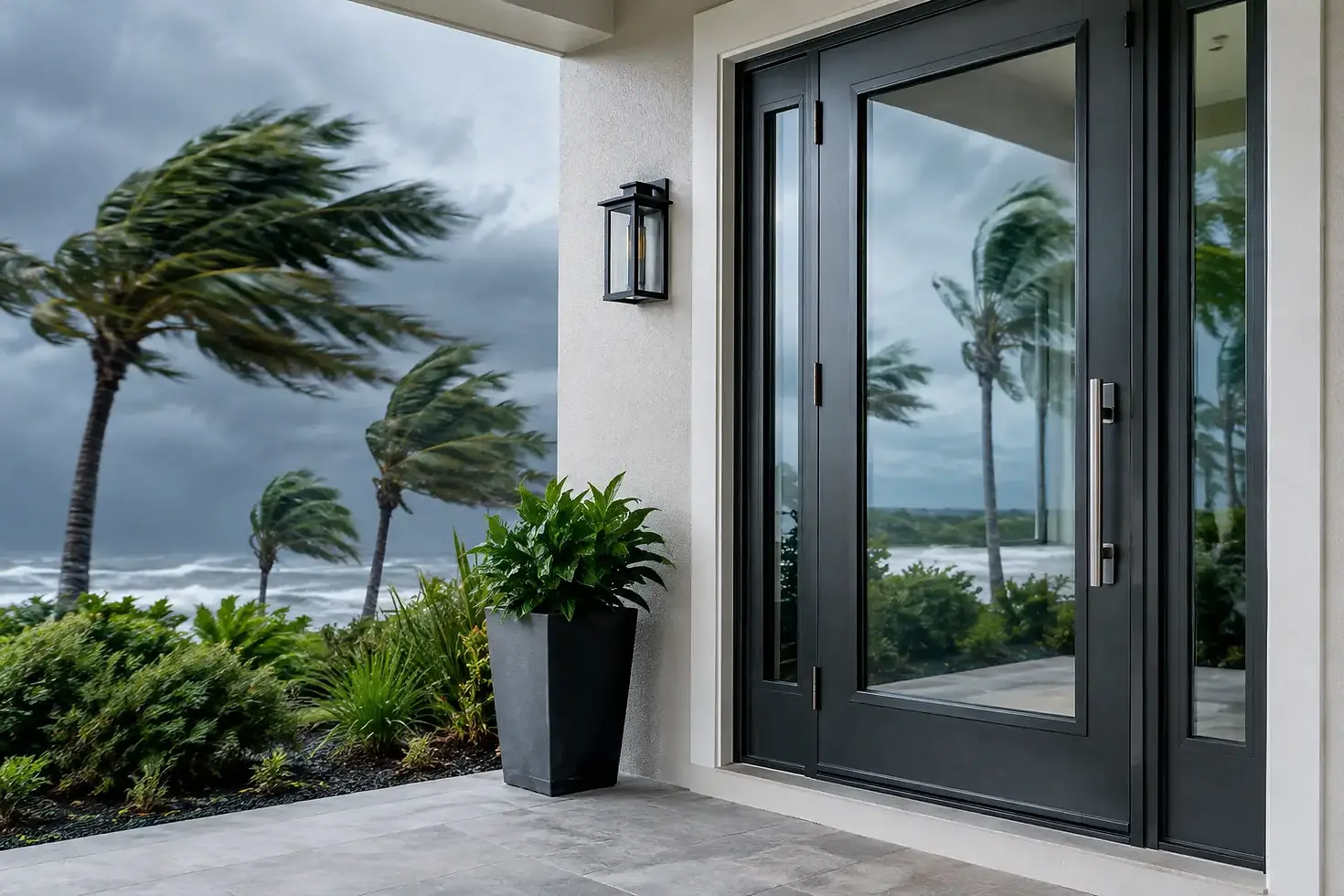
Hurricane Door Features That Protect Your Home

A garage door can be the largest moving opening in your home, and during a Southwest Florida hurricane, it can also be one of the most vulnerable. The right hurricane door features are not just about a heavier-looking door. They are about how the entire garage door system handles wind pressure, flying debris, and the force placed on tracks, hardware, and the surrounding structure.
When a standard door fails in high winds, the problem can move beyond the garage. Wind may enter the home, increase interior pressure, and contribute to damage elsewhere in the roof or walls. A properly selected and professionally installed hurricane-rated garage door helps protect the opening when conditions turn serious.
What Hurricane Door Features Actually Do
A hurricane-rated garage door is designed and tested to meet specified wind-load requirements. In practical terms, that means it is built to resist the pushing and pulling forces created by powerful winds. Wind does not only press against the outside of a garage door. As it moves around a home, it can create negative pressure that pulls outward on the door as well.
The rating needed for your home depends on its location, the home’s design, local code requirements, and the specific garage opening. A door that works for one property in Cape Coral may not be the right choice for a coastal home in Naples or a newer home in Port Charlotte. That is why the door, track system, reinforcement, and installation method all matter.
Hurricane protection also should not be confused with a promise that a door can withstand every possible storm condition. A properly rated door is a major part of a home protection plan, but it still needs to be installed correctly, maintained, and operated safely.
The Hurricane Door Features to Look For
Wind-load reinforcement
The most visible feature on many hurricane-rated garage doors is added reinforcement. Horizontal braces, commonly called struts, strengthen each door section and help prevent the panels from bending or collapsing under wind pressure.
The number, size, and placement of reinforcements vary by door model and required rating. Some doors use heavier-gauge steel sections and reinforced end stiles along with struts. A professional should match the complete door system to the required design pressure instead of adding generic braces and assuming the door is hurricane-ready.
Heavy-duty tracks and secure mounting
A strong door panel is only useful if the tracks and brackets stay in place. Hurricane-rated systems typically use heavier tracks, stronger flag brackets, reinforced jamb brackets, and more substantial fasteners to secure the system to the garage structure.
This is one reason a garage door replacement is more than swapping panels. The condition of the wood framing, the type of jamb, and the attachment points need attention. If tracks are bent, loose, or mounted to deteriorated framing, the system may not perform as intended when wind pressure rises.
Impact-rated construction when required
Wind-load rating and impact rating are related but different. A wind-rated door is designed to resist wind pressure. An impact-rated door is also tested to help resist damage from wind-borne debris, such as a piece of lumber or a flying object during a storm.
Whether impact protection is required depends on where the property is located and the applicable building code. Some homeowners choose impact-rated doors for added protection even when their specific location does not require them. The trade-off is usually a higher initial cost, but it may reduce the need for separate protective measures at the garage opening.
Tested door sections and hardware
Hurricane-rated doors are tested as systems. That includes panels, hinges, rollers, tracks, brackets, and reinforcement components. Replacing a worn roller or hinge with the wrong part can affect door operation and may compromise how the system performs.
This does not mean a hurricane door cannot be repaired. It means repairs should use compatible, properly sized components. If your door is noisy, shaking, binding, or falling out of alignment, addressing the issue early helps protect both daily operation and storm readiness.
Approved labeling and documentation
A garage door should have product information that identifies its rating and approved installation requirements. For Florida homeowners, documentation can matter during permitting, inspections, insurance discussions, and future home sales.
Do not rely on appearance alone. A door with reinforcement bars may look stronger than a basic door, but the label, product approval, and installation details are what show whether it is designed for the required conditions. Keep the paperwork after installation in a safe place.
Your Garage Door Opener Is Not Hurricane Reinforcement
An opener holds a closed garage door down during normal operation, but it is not a substitute for a hurricane-rated door system. The opener rail, arm, and motor were not designed to make an underbuilt or damaged door storm-ready.
That said, an opener upgrade can still improve everyday safety and convenience. Battery backup can allow the door to operate during a power outage, while smart controls let homeowners check whether the door is open or closed. Those features are useful after a storm, but the door’s structural rating remains the primary concern.
Before a storm, avoid depending on a manual lock while the opener is connected. Engaging a manual lock can damage the door if someone tries to operate it with the opener. If you are unsure how to secure or prepare your specific system, ask a trained garage door technician before storm conditions arrive.
Installation Quality Matters as Much as the Door
A hurricane-rated door can lose much of its value if it is installed poorly. Incorrect track spacing, missing fasteners, loose brackets, improper spring adjustment, or weakened mounting surfaces can create problems long before a hurricane makes landfall.
Professional installation starts with measuring the opening and confirming the available headroom, side room, framing condition, and door weight requirements. The technician should also set the springs and opener properly so the door moves smoothly and stays balanced. A door that is hard to lift manually, slams down, or reverses unexpectedly needs service.
For homes being remodeled or rebuilt after storm damage, permit and code requirements should be confirmed before ordering a door. Choosing a door based only on color, price, or insulation value can lead to delays if the selected model does not meet the required wind rating.
When Reinforcement Is Enough and When Replacement Makes Sense
In some cases, an existing garage door may be eligible for an approved reinforcement solution. This can be a practical option when the door panels, tracks, and framing are in good condition and the product can be upgraded to meet the needed requirements.
Replacement is often the better choice when the door is older, heavily dented, rusted, repeatedly off track, or built with lightweight components that cannot be properly upgraded. It also makes sense when you want better insulation, a new look, quieter operation, or impact-rated protection.
A site evaluation is the best way to decide. The right answer depends on the door’s condition, the rating your property requires, and whether the full system can be brought up to standard safely.
Keep Hurricane Protection Ready Year-Round
Storm readiness is not a one-day task when a named system is already approaching. Garage doors need regular attention because normal use can loosen hardware and wear down moving parts. Springs, cables, and rollers are under tension or carry significant load, so homeowners should not attempt major adjustments themselves.
Watch for doors that scrape the tracks, make grinding noises, move unevenly, leave gaps when closed, or show cracked hinges and loose brackets. These are not just annoyances. They can signal that the door is losing the smooth, balanced operation it needs.
A professional maintenance visit can identify worn rollers, frayed cables, weak hinges, track issues, opener safety concerns, and fasteners that need attention. GDM Pro Services helps Southwest Florida homeowners repair and maintain garage doors before small problems become urgent ones.
When storm season is approaching, take a close look at your garage door before you need to depend on it. A properly rated, properly installed, and properly maintained door gives your home one more dependable layer of protection when the weather changes fast.


Comments