
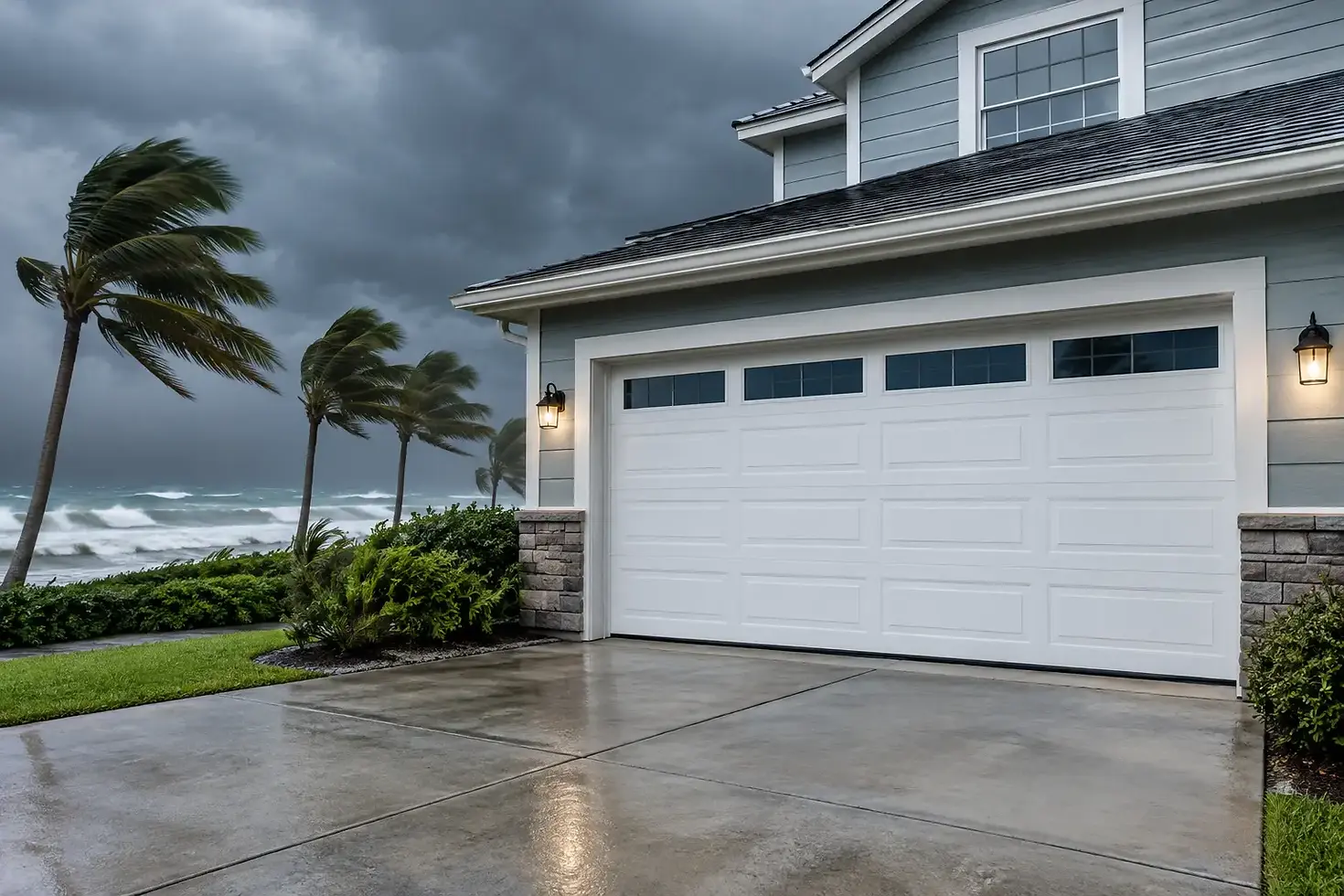
Can Garage Doors Withstand Hurricanes Safely?

A garage door can be the largest moving opening in your home, and during a hurricane, that opening matters far more than curb appeal. Can garage doors withstand hurricanes? Some can, but only when the door, track system, hardware, installation, and wind rating are designed to work together.
For Southwest Florida homeowners, a standard garage door is not automatically hurricane-ready just because it looks sturdy or has survived past storms. Strong wind can put intense pressure on a door, pull it away from its tracks, or send debris through its panels. Once a garage door fails, wind can enter the garage and increase pressure inside the house, putting the roof, walls, and other openings at greater risk.
Can Garage Doors Withstand Hurricanes in Florida?
Yes, a properly rated and professionally installed hurricane garage door can withstand the wind pressures it was designed and approved to handle. The key phrase is properly rated. A hurricane-rated door is tested and labeled for specific wind-load requirements, which may include both positive pressure pushing against the door and negative pressure pulling it outward.
Florida building requirements vary by location, exposure, and home design. A door that is appropriate for one neighborhood may not meet the requirements for a coastal home with higher wind exposure. That is why homeowners should not choose a replacement door based only on appearance, price, or a general claim that it is "hurricane-proof."
No garage door can promise zero damage in every possible storm. A direct hit from severe debris, extreme winds beyond the door's rating, or damage to the structure around the opening can still cause failure. The goal is to install a door system that meets applicable local requirements and gives your home meaningful protection during the conditions it is likely to face.
What Makes a Garage Door Hurricane-Rated?
Hurricane protection is about more than thicker steel. A rated garage door is engineered so the panels, hinges, rollers, tracks, brackets, reinforcement struts, and attachment points can resist high wind forces without coming apart.
Many hurricane-rated doors use heavier-gauge tracks, additional bracing across the door sections, stronger end brackets, and reinforced hardware. The door must also be anchored correctly to the garage framing. Even a quality door can underperform if the track is loose, the jamb brackets are improperly attached, or the opening itself has structural damage.
In some Southwest Florida locations, impact resistance may also be required. This addresses flying debris, not just wind pressure. A wind-rated door may resist pressure but still not be approved for impact protection. If your home is in an area where impact-rated products are required, that distinction is critical.
Look for a permanent label on the door that identifies its wind-load rating and approval information. Keep all installation documents, product details, and permit records with your home paperwork. These records can be useful for inspections, insurance questions, future repairs, and replacement planning.
Wind Rating and Impact Rating Are Different
Homeowners often use the terms interchangeably, but they address different risks. Wind-load rating tells you how much pressure the door is designed to handle. Impact rating means the door has passed testing for debris strikes as well as pressure performance.
A technician or installer can help verify what your address requires. This is especially valuable when replacing an older door, buying a home with an unknown installation history, or repairing a door after storm damage.
Why Older Garage Doors Are More Likely to Fail
Older garage doors may be perfectly functional on a calm day and still be a weak point during hurricane season. Doors installed before newer code updates may lack the bracing, track strength, or approved attachment methods required for current conditions.
Wear also matters. Rusted hinges, cracked rollers, loose bolts, bent tracks, frayed cables, and weakened panels reduce the system's ability to operate correctly. These problems can make a door noisy or unreliable now, but they can become a safety issue when high winds arrive.
A door that shakes, binds, reverses unexpectedly, hangs unevenly, or has visible gaps along the sides should be inspected. Do not wait for a storm watch to find out whether it can close, lock, and stay secured.
Can You Reinforce an Existing Garage Door?
Sometimes. Reinforcement kits, vertical braces, and upgraded hardware can improve the wind performance of certain existing doors. But reinforcement is not a one-size-fits-all solution, and it does not automatically make an older door hurricane-rated or code-compliant.
The door's panel condition, track system, size, material, opener setup, and how it is fastened to the opening all need to be evaluated. A damaged, thin, or poorly installed door may be better replaced than reinforced. In many cases, investing in a properly rated new door provides more dependable long-term protection, better operation, and a cleaner appearance.
Never install makeshift braces, lumber supports, or unapproved hardware as a substitute for a rated system. These fixes can interfere with door movement, create unsafe pressure points, or fail when the wind load increases. Garage door springs and cables are under heavy tension, so adjustments should be left to trained professionals.
Hurricane Season Maintenance That Actually Helps
Maintenance will not turn a standard door into a rated hurricane door, but it can prevent avoidable mechanical failures. Before the season becomes active, have the door checked for balance, track alignment, hardware condition, roller wear, cable damage, and opener performance.
Make sure the door opens and closes smoothly without excessive vibration or grinding. Test the photo-eye safety sensors and the opener's reverse function. Confirm you know how to use the emergency release, but do not disconnect the door during a storm unless there is a specific safety reason to do so.
Homeowners can safely keep the tracks clear, watch for visible damage, and report changes in operation early. Leave spring adjustments, cable work, track repairs, and wind-brace installation to a qualified garage door technician.
What to Do When a Hurricane Is Approaching
If a storm is forecast, close the garage door fully and make sure it is not blocked by vehicles, storage items, or damaged tracks. Avoid repeatedly cycling the door once winds begin to increase. If the door will not close or has come off track, treat it as an urgent repair issue rather than forcing it shut.
Do not rely on an automatic opener alone as proof that the door is secure. Inspect the door visually from inside the garage when it is safe to do so. Look for obvious gaps, loose hardware, or panels that appear bowed or separated. Follow local emergency guidance and avoid working on the door during dangerous weather.
After the storm, inspect the door before using it. Look for dents, bent tracks, displaced rollers, water intrusion, loose fasteners, or a door that is no longer level. If the opener strains, the door drags, or a cable appears loose, stop using it and arrange service.
When Replacement Is the Better Hurricane Plan
Replacement is often the practical choice when a door is outdated, heavily corroded, repeatedly repaired, visibly damaged, or not rated for your home's wind requirements. A new hurricane-rated garage door can improve storm readiness while also helping with security, energy efficiency, quieter operation, and curb appeal.
The best replacement starts with an on-site assessment, not a guess. The installer should measure the opening, inspect the framing and existing tracks, review local requirements, and recommend a door with the appropriate rating for the property. GDM Pro Services helps Southwest Florida homeowners evaluate damaged and outdated doors, then install systems built for local weather conditions.
A garage door should not be the opening you worry about when storm season arrives. If yours is older, noisy, damaged, or missing clear wind-rating information, have it checked before the next storm puts it to the test.


Comments